New Zealand vs Egypt Tactical Preview: FIFA World Cup Group G – Formation Predictions & Key Matchups
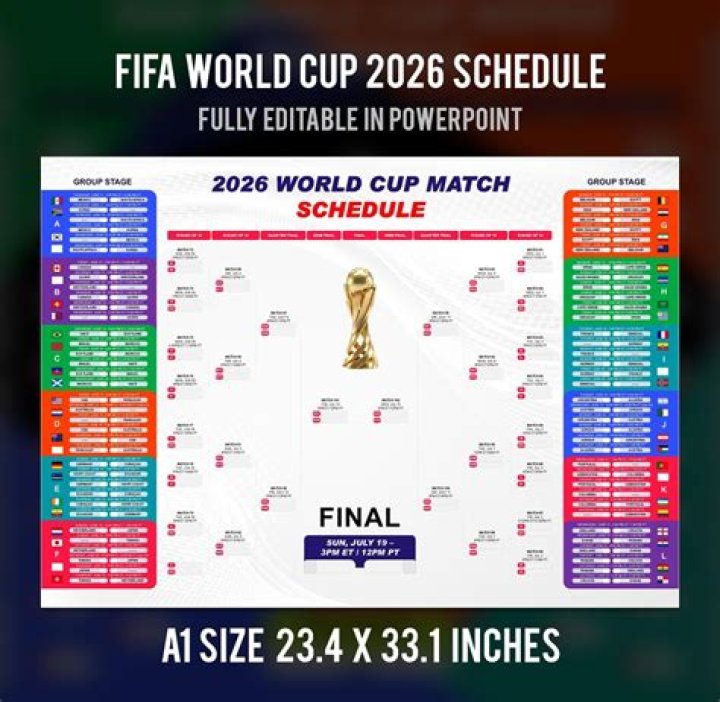
The moment the final whistle echoes across the stadium, history will have already been written — but before that defining instant arrives, the chess match begins on the training ground, inside the coaches' war rooms, and within the cold, calculated hearts of two nations desperate for World Cup glory. New Zealand vs Egypt in FIFA World Cup Group G is not merely a football match. It is a collision of two entirely different footballing philosophies, two squads carrying the weight of continental pride, and two tactical masterminds who have spent weeks dissecting every pass, every press, every weakness. With official lineups yet to be confirmed, the real story lies buried inside the data — in the last five matches that reveal everything about what is coming.
New Zealand's Last 5 Matches: The All Whites Under the Microscope
To understand where New Zealand stands as they march into this World Cup battle, one must trace their recent footsteps through five brutally honest performances that paint a vivid, sometimes alarming, sometimes inspiring portrait of this squad.
Match 1 – New Zealand 4–1 Chile (FIFA Series, New Zealand)
A thunderous statement of intent. On home soil, the All Whites dismantled Chile with a commanding 4–1 victory that sent shockwaves through the footballing world. The attacking fluidity was breathtaking — movement off the ball was sharp, combinations in the final third were clinical, and the defensive shape held firm until the visitors managed a mere consolation. This was New Zealand at their fearless, free-flowing best.
Match 2 – New Zealand 0–2 Finland (FIFA Series, New Zealand)
Then came the gut punch. Just days after their Chile euphoria, New Zealand crumbled against Finland, surrendering a 0–2 defeat on their own turf. The pressing structure that had suffocated Chile was nowhere to be found. Finland exploited the spaces between New Zealand's midfield and defensive lines with surgical precision. A chilling reminder that fragility lurks just beneath the surface.
Match 3 – New Zealand 1–2 Ukraine (Int. Friendly Games)
Another defeat, another dagger. Ukraine, a battle-hardened European side, exposed New Zealand's vulnerability when facing technically superior opponents who press high and transition quickly. Conceding twice while managing only a single goal in reply, New Zealand's defensive coordination appeared disjointed under sustained pressure. Warning signs for a World Cup stage were unmistakable.
Match 4 – New Zealand 1–0 Côte d'Ivoire (Int. Friendly Games)
Resilience returned. A narrow but psychologically significant 1–0 win over Côte d'Ivoire demonstrated New Zealand's capacity to grind out results when tactical discipline is prioritized. The defensive structure was tighter, transitions were more controlled, and the lone goal proved enough to hold firm against African quality. A blueprint, perhaps, for survival at the highest level.
Match 5 – Iran 2–2 New Zealand (FIFA World Cup, Group G)
The World Cup opener delivered pure drama. Drawing 2–2 against Iran in their first Group G match, New Zealand showed extraordinary character — twice coming from behind or trading blows with a physical, well-organized opponent. Goals conceded from set-pieces and transitional moments remain a recurring concern, yet the fighting spirit of this squad cannot be questioned. They left the pitch with a point and a point of fury still burning inside them.
Egypt's Last 5 Matches: The Pharaohs' Relentless March
Egypt arrive at this Group G confrontation carrying the momentum of a squad that has been forged through fire — continental competition, brutal qualifying campaigns, and high-stakes friendly encounters against global giants. Their last five fixtures tell the story of a team simultaneously brilliant and brittle.
Match 1 – Egypt 3–2 Côte d'Ivoire (Africa Cup of Nations, Knockout Stage)
A pulsating triumph that showcased Egypt's attacking depth and mental fortitude. Clawing past the Ivorians in a high-octane knockout encounter, the Pharaohs demonstrated that when their creative players are firing, they can unlock any defensive system. But conceding twice also exposed the vulnerability that stalks them like a shadow.
Match 2 – Senegal 1–0 Egypt (Africa Cup of Nations, Knockout Stage)
Heartbreak in stunning fashion. Despite their AFCON journey reaching magnificent heights, Egypt fell to Senegal in a tightly contested knockout clash. The single goal that separated them felt cruel, but the performance highlighted how Egypt can be stifled when opponents successfully neutralize their central creative channels. The tactical lesson was stark.
Match 3 – Saudi Arabia 0–4 Egypt (Int. Friendly Games)
A performance of devastating attacking authority. Egypt obliterated Saudi Arabia on their own territory with a 4–0 scoreline that silenced every doubt about their attacking potency. The movement of the forwards was electric, the midfield controlled tempo beautifully, and Saudi Arabia were rendered utterly powerless. Egypt, when clicking, are an absolute force of nature.
Match 4 – Brazil 2–1 Egypt (Int. Friendly Games)
A narrow defeat against the Seleção that revealed both Egypt's quality and their limitations in equal measure. Competing admirably against one of the world's most dangerous attacking forces, Egypt earned deserved respect — yet conceded twice as Brazil's individual brilliance ultimately overwhelmed their defensive organization in key moments.
Match 5 – Belgium 1–1 Egypt (FIFA World Cup, Group G)
The World Cup opener for the Pharaohs ended in a gripping draw against formidable Belgium — a result that speaks volumes about Egypt's resilience on the grandest stage. Matching the Red Devils blow for blow, Egypt's tactical discipline and individual quality were on full display. The point earned fuels their belief that this Group G campaign is far from decided.
Predicted Tactical Formations: The Coaches' Secret Weapons Revealed
Without confirmed lineups, the formation predictions must be extrapolated from recent tactical patterns, personnel tendencies, and the specific demands of this matchup. This is where the true tactical intrigue ignites.
New Zealand – Predicted Formation: 4-4-2 (Mid-Block with Counter-Attack Threat)
Based on their last five performances, New Zealand's coaching staff has oscillated between an ambitious pressing system and a more pragmatic mid-block defensive structure. Against superior technical opponents — as demonstrated against Finland and Ukraine — they have been punished when pressing too high. However, against Côte d'Ivoire and in the opening phases against Iran, a compact 4-4-2 mid-block proved far more effective, providing solidity and allowing dangerous counter-attacking transitions through wide channels.
Against Egypt, expect New Zealand to deploy a disciplined 4-4-2 with two banks of four that sit relatively deep, denying Egypt the central creative spaces their playmakers crave. The two forwards will be tasked with immediate pressure on Egyptian centre-backs during build-up play, aiming to force errors high up the pitch. Wide midfielders will tuck inside defensively but stretch wide on transitions, targeting the spaces behind Egypt's attacking fullbacks. Set-pieces will be treated as critical weapons given New Zealand's physical presence at dead-ball situations.
Egypt – Predicted Formation: 4-2-3-1 (Possession-Based with High Press)
Egypt's recent performances — particularly the Saudi Arabia demolition and the Belgium draw — strongly suggest a 4-2-3-1 structure that provides a double pivot for defensive solidity while unleashing a creative number ten behind a central striker. The two defensive midfielders screen the backline effectively while the number ten — the Pharaohs' most dangerous creative force — operates in the space between New Zealand's midfield and defensive lines.
Full-backs will push aggressively forward in possession phases, creating overloads in wide areas and delivering crosses into dangerous positions. The high press will be triggered intelligently rather than relentlessly — targeting New Zealand's centre-backs during build-up play and forcing long balls that Egypt's physical defenders can comfortably deal with. Against New Zealand's counter-attacking threat, the two defensive midfielders become absolutely critical in providing cover and cutting off transitions before they develop into danger.
The Key Player Matchups That Will Decide Everything
When the tactics are stripped away, football ultimately becomes a collection of individual duels that cascade into collective outcomes. These are the defining matchups that will shape the narrative of New Zealand vs Egypt at the FIFA World Cup.
New Zealand's Playmaker vs Egypt's Double Pivot
New Zealand's most creative central presence will face the relentless pressure of Egypt's double pivot — two midfielders tasked specifically with suffocating opposition creativity. If New Zealand's orchestrator can escape the vice-like grip of Egypt's defensive midfielders and find pockets of space between the lines, the All Whites' transition game becomes infinitely more dangerous. If he is successfully strangled, New Zealand will be forced into long, predictable deliveries that Egypt's backline will gratefully consume.
Egypt's Number Ten vs New Zealand's Central Midfield Pair
This is arguably the most decisive individual battle of the entire match. Egypt's creative fulcrum, operating as the number ten behind the central striker, is the player who unlocks defenses with disguised passes, intelligent movement, and the ability to draw fouls in dangerous areas. New Zealand's central midfield pair must maintain relentless positional discipline — never being drawn out of shape, never allowing the Egyptian playmaker a free touch inside the box or on the edge of the area. One moment of midfield indiscipline could be the difference between a point and a catastrophic defeat.
Egypt's Attacking Fullbacks vs New Zealand's Wide Midfielders
Based on Egypt's 4-2-3-1 predicted shape, their fullbacks will push aggressively high — creating width and crossing opportunities from deep positions. This generates a critical duel with New Zealand's wide midfielders, who must simultaneously track back defensively without completely abandoning their own attacking contributions on the transition. The physical and tactical demands placed on New Zealand's wide players in this specific duel will be extraordinary. Any lapse in concentration against Egypt's overlapping fullbacks could result in dangerous deliveries into the New Zealand penalty area.
New Zealand's Physical Strikers vs Egypt's Centre-Backs
New Zealand's forward line, physical and direct in their approach, will target Egypt's centre-backs relentlessly through aerial duels, flick-ons, and diagonal runs in behind. Egypt's defensive pairing must communicate perfectly and maintain their defensive line with discipline — if the line is too high, New Zealand's pace in behind becomes lethal on the counter; if too deep, New Zealand's strikers will feast on crosses and set-pieces. The battle between New Zealand's forwards and Egypt's central defenders is a war of inches that neither side can afford to lose.
The Tactical Verdict: Who Holds the Edge?
New Zealand will arrive with organization, physical intensity, and counter-attacking danger that Egypt cannot afford to underestimate. Their 4-4-2 mid-block has proven difficult to break down, and their fighting spirit — evidenced by the 2–2 draw against Iran — makes them a dangerous opponent regardless of the scoreline.
Egypt, however, possess the individual quality, tactical sophistication, and momentum — forged through their AFCON campaign, the Saudi Arabia demolition, and the Belgium draw — to control this match when their 4-2-3-1 system functions at full capacity. Their ability to dictate tempo, exploit wide areas through aggressive fullbacks, and unlock defenses through a world-class number ten gives them a structural advantage that should, on paper, prove decisive.
The true drama will unfold not in the opening exchanges, but in the tense, suffocating minutes between the 60th and 80th mark — when legs grow heavy, tactical discipline fractures under pressure, and one moment of individual brilliance or individual catastrophe writes the final chapter. In a match this loaded with tactical intrigue, prediction feels almost reckless. But one truth is inescapable — New Zealand vs Egypt at the FIFA World Cup will not be decided by tactics alone. It will be decided by the player who refuses, in the most desperate moment, to blink.
