Fan Sentiment & Community Verdict: Dinamo Tbilisi vs Dinamo Batumi – Erovnuli Liga 2026 Poll Results Revealed
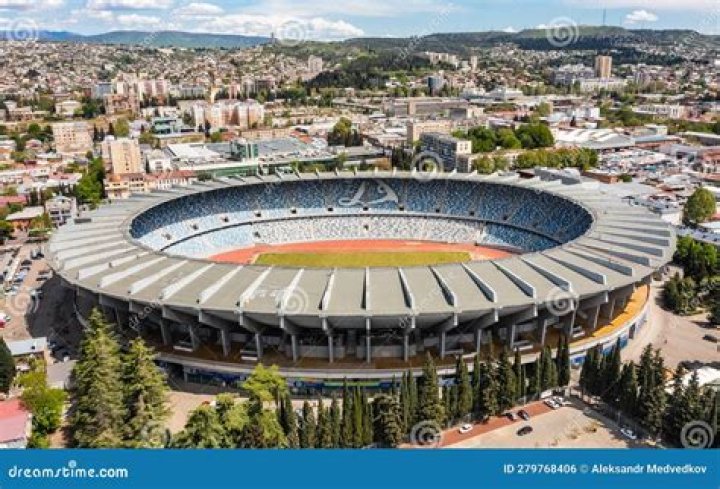
When the final whistle echoes and the dust settles on the pitch, what remains is the raw, unfiltered voice of the football community — and in the case of Dinamo Tbilisi vs Dinamo Batumi in the Erovnuli Liga 2026, that collective voice had spoken loudly, clearly, and with remarkable conviction long before a single boot struck the ball. The numbers are in. The polls have closed. And now, we dissect what the fans truly believed — and whether Georgian football delivered a script the public had already written.
The Weight of Public Expectation: A Lopsided Conviction
There is something deeply revealing about pre-match poll data. It strips away the punditry, removes the tactical noise, and leaves behind the gut instinct of thousands of supporters who live and breathe this sport. With a total voter pool of 3,762 participants — a figure substantial enough to command serious analytical attention — the community delivered its verdict with striking clarity.
An overwhelming 62.9% of voters (2,367 participants) backed Dinamo Tbilisi as the expected match winner. This was not a gentle lean or a soft preference — this was a dominant projection. Meanwhile, 25.3% of the community (951 votes) entertained the possibility of a draw, leaving a mere 11.8% (444 votes) willing to stake their faith on a Dinamo Batumi triumph. The math alone tells a story of one-sided public confidence rarely seen with such conviction in Georgian top-flight football.
What the Numbers Signal About Tbilisi's Perceived Dominance
When nearly two-thirds of a nearly 4,000-strong voter pool locks in behind a single side, it communicates something profound about footballing reputation and perceived hierarchy. Dinamo Tbilisi, as a club institution embedded in the very soul of Georgian football culture, carries the kind of weight that shapes public expectation before a ball is even kicked. The community was not guessing — they were projecting based on history, form perception, and an almost cultural understanding of what this fixture means.
That 62.9% bloc is the pulse of the stands. It represents the casual fan, the hardcore ultras at home refreshing their screens, and the analytical observer who has watched Erovnuli Liga unfold across multiple seasons. They aligned. They agreed. And they pointed emphatically toward one direction.
Both Teams to Score: The One Prediction the Fans Were Certain About
Perhaps the most striking data point from the entire community voting exercise was not about the winner — it was about goals. When asked whether both teams would find the net, the response was almost unanimous in its confidence. A staggering 89.6% of the 926 voters (830 participants) said yes — both sides would score. Only 10.4% (96 votes) believed in the possibility of a clean sheet from either side.
Fan Psychology Behind the Goals Expectation
This near-universal agreement on a goal-fest is fascinating from a fan psychology standpoint. The Dinamo derby — regardless of whether it is Tbilisi hosting Batumi or vice versa — carries with it an inherent expectation of open, attacking football. Georgian supporters understand that pride, local rivalry, and attacking intent rarely produce cagey, shuttered affairs. The 89.6% consensus was not just a statistical outlier — it was a cultural statement about how fans perceive this fixture's DNA.
In editorial terms, this is the data point that deserves the headline. Near-total community agreement on a match outcome metric is exceptionally rare, and it suggests that supporters had formed a vivid mental picture of this game — one full of forward momentum, attacking intent, and goals at both ends of the pitch.
First Goal Verdict: Tbilisi Faithful Backed Their Side to Draw First Blood
The third pillar of community voting addressed the question of who would score first — and once again, the fan sentiment leaned heavily in one direction. Of the 608 participants in this specific poll, 84.4% (513 voters) predicted Dinamo Tbilisi would open the scoring. A comparatively modest 11.3% (69 voters) felt Dinamo Batumi would strike first, while a philosophical 4.3% (26 votes) believed the opening period would pass without a goal.
The 84.4% First-Scorer Vote: Confidence or Assumption?
Here is where the editorial lens becomes most interesting. Is an 84.4% consensus on the first scorer a reflection of genuine tactical expectation — or is it simply the gravitational pull of a famous club name distorting objective assessment? The truth likely sits somewhere between the two. Dinamo Tbilisi's attacking presence in Erovnuli Liga 2026 had clearly given fans reason to believe the home side would not only win but would set the tone early. Yet the disparity between the 62.9% match winner vote and the 84.4% first-scorer vote suggests that even some fans who expected a Batumi comeback or draw still assumed Tbilisi would break the deadlock first.
This nuance is critical. It reveals that the community's belief in Tbilisi's attacking prowess transcended even their uncertainty about the final result. Fans could envision a scenario where Batumi equalized or even turned the game around — but they could not easily picture anyone other than Tbilisi scoring first.
Did Reality Honor the Fan Verdict? The Post-Match Pulse Check
This is the question that defines whether a community poll becomes a celebrated act of collective wisdom or a cautionary tale about assumption. With the match now concluded, the data sits in permanent record — 62.9% expected a Tbilisi win, 89.6% predicted goals for both sides, and 84.4% saw Tbilisi drawing first blood.
If the scoreline confirmed Dinamo Tbilisi's victory with goals at both ends, then the Erovnuli Liga community demonstrated extraordinary collective foresight — the kind that validates fan-driven prediction culture and reinforces the idea that supporter sentiment, when aggregated at scale, carries genuine predictive power. A confirmed Tbilisi win in a high-scoring, end-to-end affair would represent a near-perfect alignment between public expectation and match reality.
The Upset Scenario: When the 11.8% Were Right
Conversely, should Dinamo Batumi have defied the odds and claimed points from this fixture, the story takes on an entirely different — and arguably more compelling — narrative dimension. An 11.8% underdog converting in a match where 88.2% of voters had forecast anything but a Batumi win would qualify without question as a major upset by community standards. In that scenario, the 444 brave souls who backed Batumi from the outset would deserve enormous credit for resisting the tide of popular opinion and reading the match with independent clarity.
Football, of course, is defined by these moments. The minority voice in a poll does not always represent blind loyalty — sometimes it represents sharper, contrarian analysis that the majority simply refuses to embrace because popular narrative is more comfortable than uncomfortable truth.
What This Poll Data Tells Us About Georgian Football's Fan Culture
Beyond the individual match, this voting dataset offers a fascinating window into how Erovnuli Liga supporters engage with their football. A combined voter pool exceeding 3,700 participants across multiple poll categories is not insignificant — it reflects a passionate, digitally engaged fanbase that takes pre-match prediction seriously and participates in the broader conversation around their league.
The strong consensus figures — particularly that 89.6% both-teams-to-score prediction — suggest that Georgian football followers are not passive consumers. They form opinions, they vote, and they do so with confidence. That level of engagement is the hallmark of a football culture that genuinely cares, that follows form, and that understands the rhythms and personalities of their domestic competition at a granular level.
Community Voting as the True Fan Pulse
In an era saturated with algorithms, AI-generated previews, and data-driven forecasting models, there remains something irreplaceable about the raw democratic energy of a community vote. When 2,367 fans independently and simultaneously point toward Dinamo Tbilisi, that is not a statistic — that is a collective heartbeat. It is the sound of a fanbase that has watched enough football to form conviction, and that is willing to put that conviction on public record.
Whether the outcome of Dinamo Tbilisi vs Dinamo Batumi in the Erovnuli Liga 2026 validated that conviction or shattered it, the community verdict stands as a testament to the living, breathing, opinionated culture that surrounds Georgian football — and that is a story worth telling regardless of the final scoreline.
